In high-speed fiber networks, ensuring that every connection performs as expected is essential. This is where the MPO loopback becomes particularly valuable. Though small and often overlooked, it plays a key role in testing and validating multi-fiber connections in modern data environments.
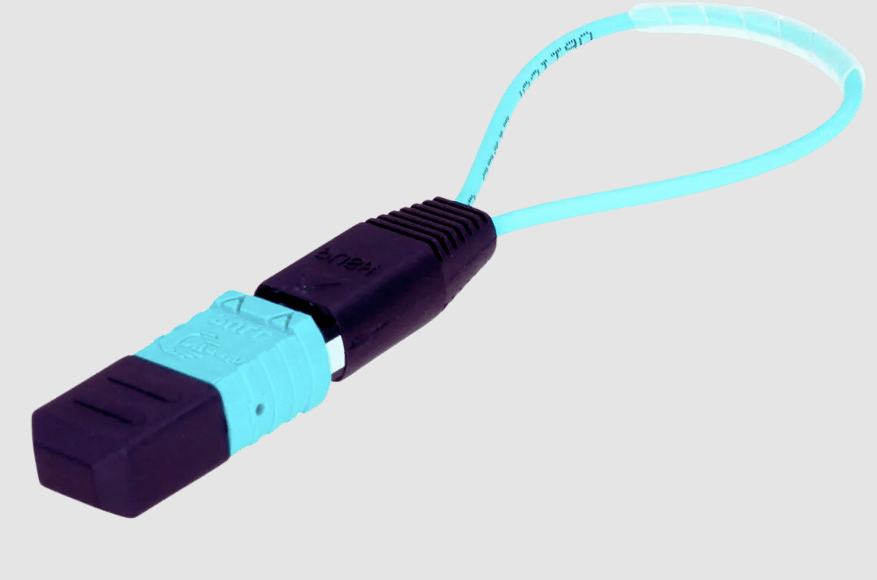
An MPO loopback is a compact device designed to connect transmit and receive fibers within an MPO connector. By looping the signal back to its source, it allows technicians to verify whether a network port, transceiver, or cable is functioning correctly without needing a full external setup.
How MPO Loopback Supports Network Testing
Testing fiber networks can be complex, especially when dealing with high-density connections. MPO loopback tools simplify this process by creating a closed signal path. When a signal is sent through the connector, it immediately returns, allowing systems to detect continuity and performance.
This method is especially useful during initial deployment or troubleshooting. Instead of guessing where a fault might be, technicians can isolate issues quickly. If the signal returns successfully, the port and transceiver are likely working as intended. If not, further investigation is needed.
Another advantage is compatibility with automated testing systems. Many modern devices rely on loopback testing as part of their diagnostic routines. Using an MPO loopback ensures that these systems can run accurate checks without requiring complex configurations.
Key Advantages in High-Density Environments
Data centers and enterprise networks are becoming increasingly dense, with hundreds or even thousands of fiber connections in a single location. In such environments, efficiency and accuracy are critical.
MPO loopback devices help reduce downtime by enabling quick validation of multiple channels at once. Since MPO connectors handle multiple fibers simultaneously, a single loopback can test several connections in one step. This saves time compared to testing each fiber individually.
They also support higher data rates. As networks move toward 40G, 100G, and beyond, ensuring signal integrity becomes more challenging. Loopback testing provides a straightforward way to confirm that high-speed links are stable and reliable.
See also: Revolutionizing Security: The Impact of Advanced X-Ray Scanner Technology in Modern Applications
MPO Loopback in Maintenance and Troubleshooting
Routine maintenance is essential for keeping fiber networks running smoothly. MPO loopback tools make it easier to perform regular checks without disrupting the entire system.
For example, when a network issue arises, technicians can use a loopback to test specific ports or modules. This helps narrow down whether the problem lies in the hardware, the cabling, or the configuration. By identifying the root cause quickly, repairs can be made more efficiently.
They are also useful when upgrading network equipment. Before integrating new components into a live system, loopback testing ensures that everything is functioning properly. This reduces the risk of unexpected failures after deployment.
Choosing the Right MPO Loopback for Your Setup
Not all loopback devices are identical. Factors such as fiber count, polarity type, and connector format must match the existing network infrastructure. Using the wrong configuration can lead to inaccurate test results or compatibility issues.
It’s also important to consider build quality. Since loopbacks are used repeatedly, they need to maintain consistent performance over time. Durable materials and precise alignment help ensure reliable testing outcomes.
Cleanliness is another critical factor. Dust or contamination on fiber connectors can affect signal transmission, leading to misleading results. Regular inspection and proper handling of loopback devices help maintain accuracy.
Conclusion
The MPO loopback may be a small component, but its impact on fiber network performance is significant. By enabling quick and reliable testing, it helps ensure that high-speed connections operate as expected.
From installation to ongoing maintenance, MPO loopback tools provide a practical way to validate complex fiber systems. As networks continue to grow in scale and speed, having dependable testing solutions like MPO loopback devices will remain essential for maintaining performance and reliability.