As an essential part of home renovation, the color scheme and layout of the bathroom often affect the comfort level of the showering environment. The main goals when choosing and coordinating colors for a small family bathroom are: to create a sense of spaciousness, increase brightness, avoid a feeling of confinement, and maintain a visually appealing and clean look.
With the right color choices, a small bathroom can often appear larger and more comfortable than its actual size.
At the same time, I would like to introduce you to Eclife, a professional platform that features thousands of design solutions. I’m confident you’ll find one that meets your needs. In this passage,we offer ten different and unique selection techniques and methods to help you make the best choice for yourself. You can find them all on the Eclife platform.Let’s take a look at it together!
1. Cleverly use warm neutral colors to increase the sense of warmth.
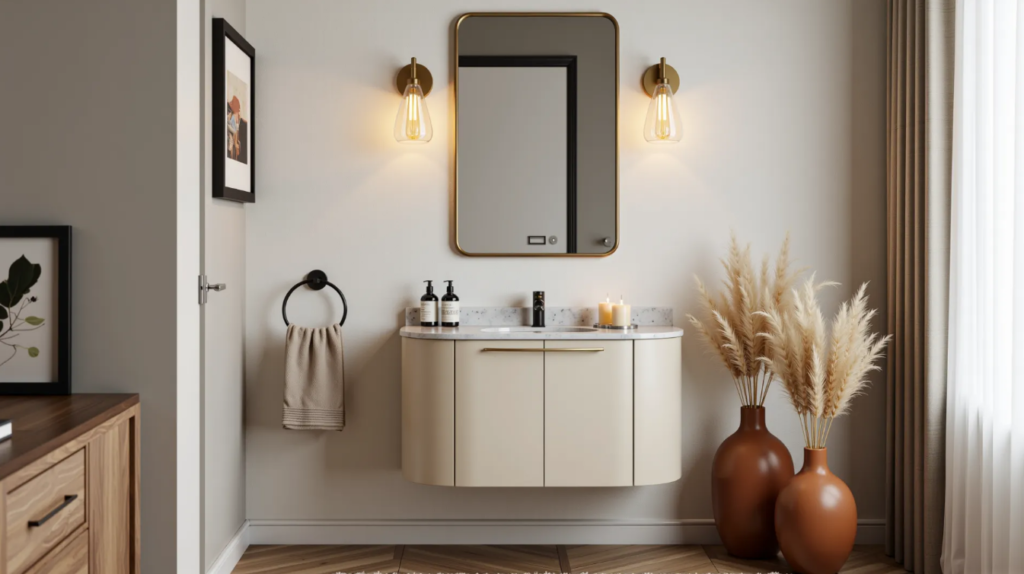
Pure cool colors can easily appear “cold and harsh.” When designing a small bathroom, we can incorporate colors such as beige, light wood tones, creamy coffee, warm gray, and materials with wood or stone textures. These colors and materials can increase comfort without taking up extra space. In the image, the off-white vanity, wooden storage cabinet, and white walls create a harmonious scene. It’s bright and clean, producing a pleasing visual effect.
2. Try to use light colors.
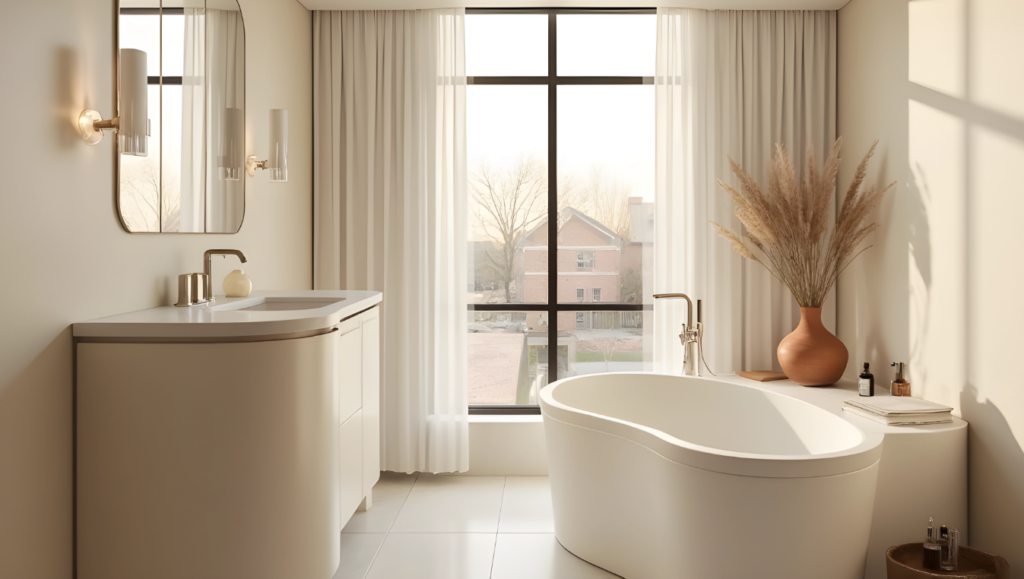
Light colors are the safest and most effective choice for small bathrooms. White, off-white, and cream colors maximize light reflection, making the space appear larger and cleaner. This bathroom design features warm and soft tones, creating a relaxing and comfortable atmosphere. White sheer curtains and dried flowers further enhance the warm and natural feel of the space. The entire bathroom seems to soothe fatigue and bring peace and tranquility to both body and mind.
3. Light-colored background walls.
Light-colored bathroom accent walls are not only decorative elements in bathroom design, but also play a crucial role in expanding space, regulating atmosphere, and enhancing practicality. Using light colors for bathroom accent walls visually stretches the wall dimensions, making the bathroom appear more spacious. Light-colored walls effectively reflect natural and artificial light, reducing shadowed areas and making the bathroom brighter and more airy overall. This is especially crucial for bathrooms without windows or those with poor lighting, significantly improving the feeling of confinement and being particularly suitable for small apartments or spaces with insufficient natural light, enhancing overall brightness.
4. The overall color scheme is orderly and consistent.
In small spaces, avoid: strong contrasts between dark and light colors, the simultaneous use of multiple colors, and complex patterns or large, contrasting designs. To maximize the visual perception of space, limit yourself to 1-2 main colors, maintaining color harmony throughout the entire design. You can use different shades of the same color family or different color families that are close in hue. For example, the image uses a light beige background without large areas of black or blue. We can enrich the space through variations in texture rather than color.
5. Make effective use of negative space.
When walls, ceilings, and large vertical surfaces are kept simple and uniform, visual boundaries are weakened, and the space is “stretched” psychologically, making small spaces appear larger and more open. Clutter often stems from information overload. Leaving blank spaces reduces visual distractions, allowing lines, proportions, and structure to take center stage, making the space naturally appear clean, orderly, and sophisticated.
6. Dark colors should only be used as accents.
If you find a single light color monotonous and want to add more design elements, you can use a darker color for the shower area accent wall, or use small areas of dark-colored floor tiles or a dark-colored bathroom vanity as a visual focal point. Avoid using large areas of dark colors, as this will significantly reduce the perceived space. Additionally, it’s recommended to keep the toilet and sink white, or the lightest possible color, and to use consistent colors for the hardware, such as the black used for the door handles, frames, and shower fixtures in the image. This will create a stable overall visual effect and prevent a cluttered appearance.
7. Warm, woody tones
Humans have an instinctive affinity for natural materials. Wooden tones subconsciously convey feelings of safety, relaxation, and balance, making them particularly suitable for spaces that require a calming atmosphere, such as bathrooms and bedrooms. For small spaces, it’s best to use light wood tones to avoid visually compressing the space; pairing them with white, beige, or light gray is the safest option. Concentrate the wood tones on cabinets, niches, or specific wall sections, avoiding mixing multiple wood colors to maintain a more sophisticated and unified look. As shown in the image, the shelving unit, mirror frame, and vanity all use the same natural wood color, complemented by greenery, creating a pleasant and harmonious feeling.
8. Clean gray
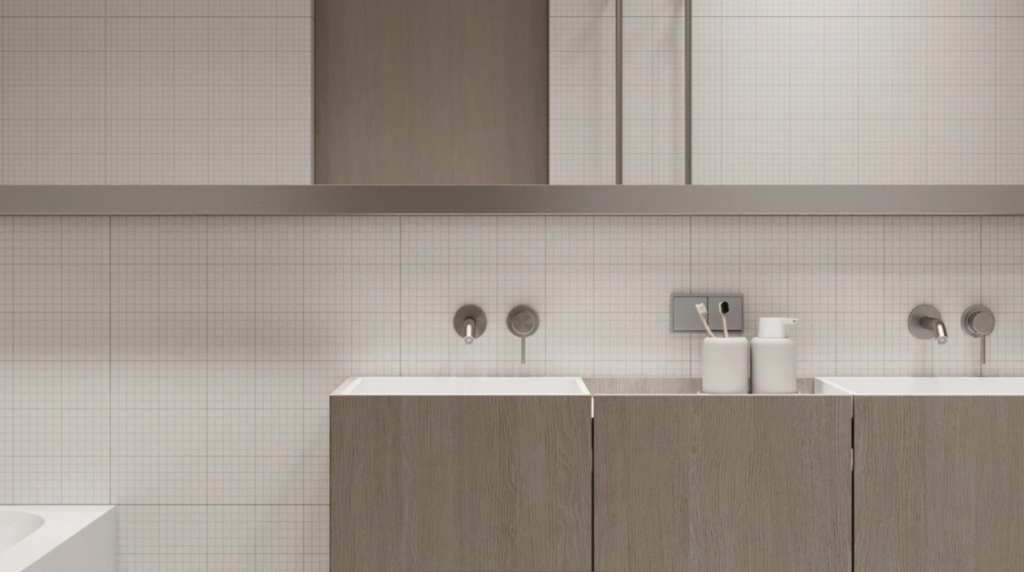
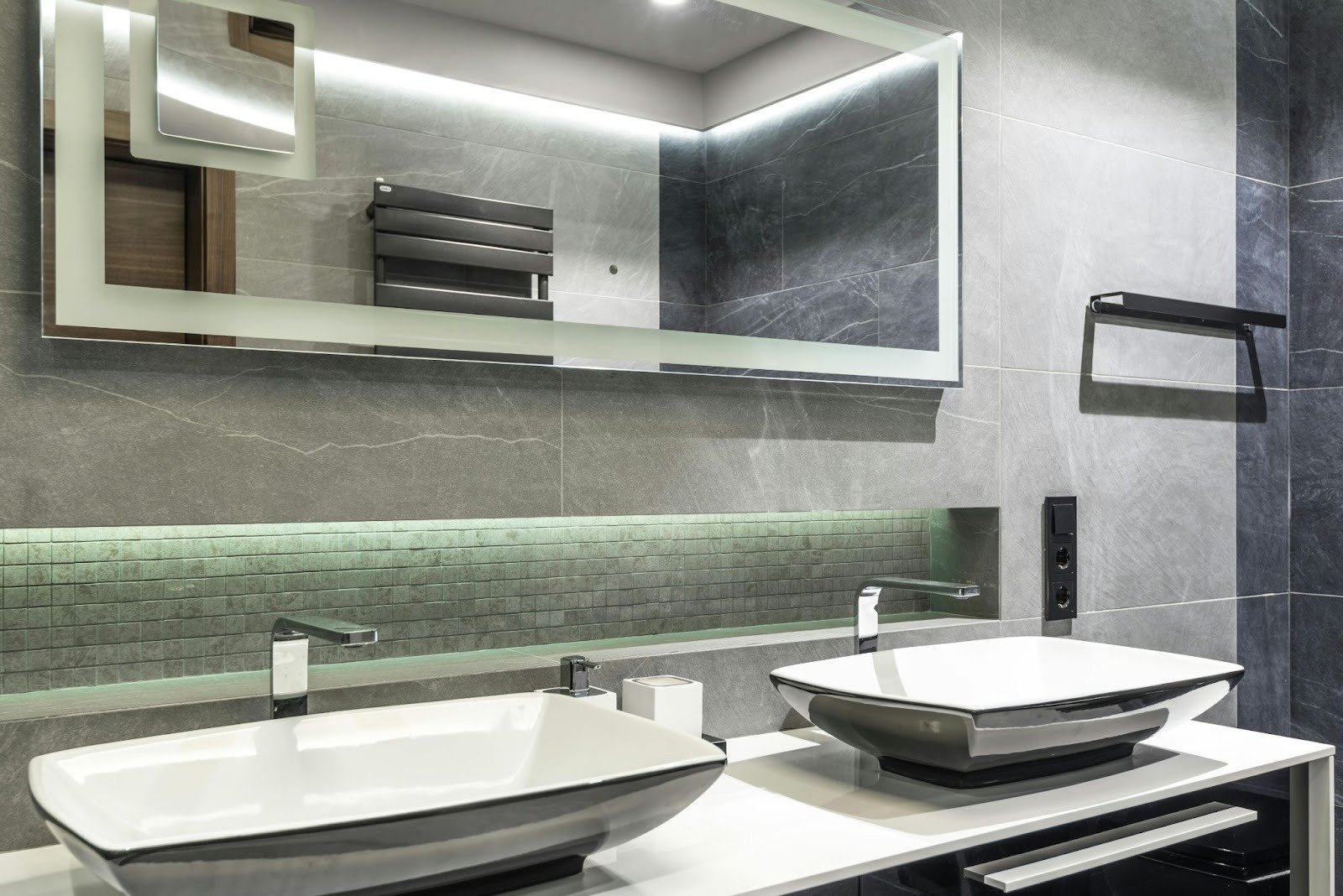
The neutral characteristics of gray make it ideal for various bathroom styles, including modern minimalist, industrial, and Scandinavian designs. Light gray: high in brightness, warm or neutral in tone, can enlarge the space and increase a sense of openness; Medium gray: stable and versatile, can be used as a main color or for functional zoning; Dark gray: strong in texture and distinctly modern, but using it extensively in small spaces can visually compress the area. Therefore, when choosing colors for a small bathroom, light gray should be used as the background color, while dark or medium gray can be used as accents. If you prefer a simple and modern style, consider using gray as the main color.
9. White is the main color, with other colors used as accents.
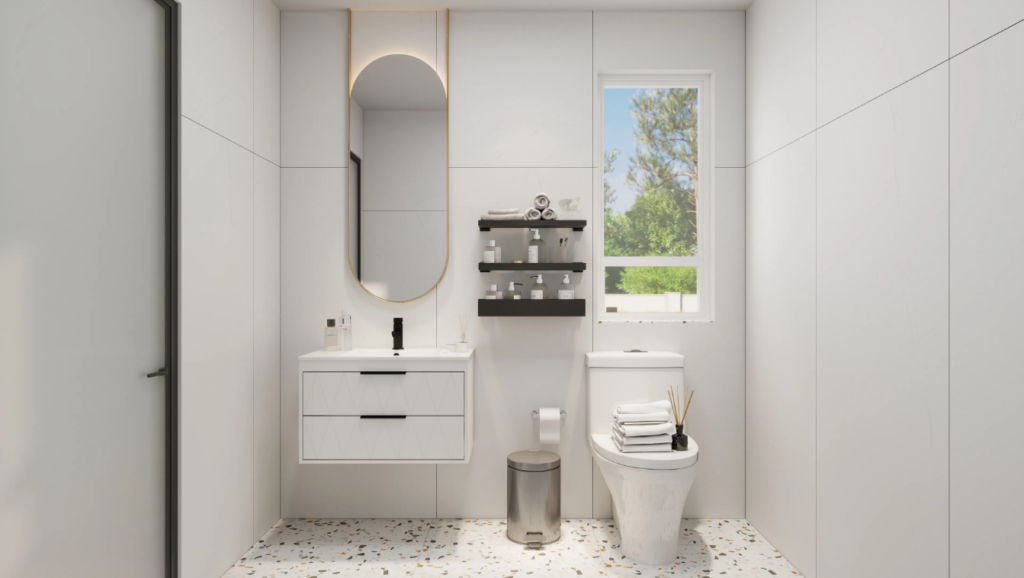
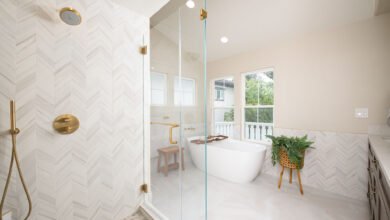
When choosing colors for a small bathroom, the large areas such as the toilet, walls, and floor will significantly impact the overall impression. Therefore, it’s best to use white or light colors for these areas. For accents like mirror frames, shelves, or trash cans, you can use silver, gold, or black to add visual interest and create a spacious and layered look without sacrificing brightness.
10. Incorporate greenery to add a sense of freshness and vitality.
For small bathrooms, when choosing colors, in addition to using light colors and white, you can also consider adding some green plants to enhance the sense of freshness and openness, making the bathroom appear more spacious and bright, and transforming it into a relaxing space.
Summary
The essence of small bathroom design is subtractive thinking + functional integration. Through rational layout, light color schemes, wet and dry separation, and vertical storage, even a small space can be transformed into a practical, bright, comfortable, and aesthetically pleasing bathroom. We hope this article has been helpful in guiding your color choices and combinations for your small bathroom.