As internet usage continues to surge worldwide, the role of an ftth cables manufacturer has become increasingly vital. Fiber To The Home (FTTH) technology is now a cornerstone of high-speed communication, delivering fast and stable internet directly to residential users. Behind this seamless experience lies a complex manufacturing process that ensures fiber-optic cables perform reliably under real-world conditions.
From streaming and remote work to smart homes and cloud computing, today’s digital lifestyle depends heavily on strong network infrastructure. This makes the contribution of fiber cable manufacturers more relevant than ever.
How Fiber-Optic Cables Power Modern Networks
Fiber-optic cables are designed to transmit data using light signals rather than electricity. This allows for significantly higher speeds and lower signal loss compared to traditional copper cables. The precision required to produce these fibers is remarkable, as even microscopic imperfections can impact performance.
An ftth cables manufacturer is responsible for creating cables that can handle both speed and durability. These cables are built to endure environmental stress, such as temperature changes and physical strain during installation, while still maintaining consistent data transmission.
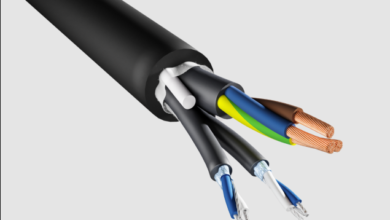
The structure of fiber cables includes protective layers that shield delicate glass fibers. This careful design ensures that the cables remain functional over long periods, even in challenging conditions.
What Defines a Reliable FTTH Cables Manufacturer
Core Qualities of an FTTH Cables Manufacturer
A dependable ftth cables manufacturer focuses on quality, consistency, and compliance with international standards. These manufacturers follow strict production processes to ensure each cable meets performance benchmarks for signal strength and longevity.
Testing is a crucial part of manufacturing. Cables are evaluated for factors like attenuation, tensile strength, and resistance to external elements. This helps ensure they can perform effectively once deployed in real-world networks.
Another defining factor is the use of advanced technology. Modern manufacturing facilities rely on automated systems and precision equipment to maintain uniform quality. This reduces the risk of defects and enhances overall efficiency.
In addition, manufacturers that invest in research and development are better equipped to adapt to changing industry needs. As data consumption increases, the demand for improved cable designs continues to grow.
See also: Revolutionizing Security: The Impact of Advanced X-Ray Scanner Technology in Modern Applications
The Impact on Network Performance
The quality of fiber-optic cables has a direct influence on network performance. High-quality cables support faster data transfer, reduced latency, and fewer disruptions. This is especially important in households with multiple connected devices.
On the other hand, poorly manufactured cables can lead to inconsistent connections and higher maintenance costs. Network providers often face challenges when dealing with substandard materials, which can affect service reliability.
For end users, the difference is noticeable. A well-built FTTH network offers smooth streaming, stable video calls, and efficient online activities. This highlights the importance of choosing the right manufacturing partner in large-scale infrastructure projects.
Industry Trends Shaping Fiber Cable Manufacturing
The fiber optics industry is evolving rapidly to keep up with global connectivity demands. One key trend is the development of compact, high-capacity cables that allow more data to be transmitted within limited space. This is particularly useful in urban environments where infrastructure space is limited.
Sustainability is also becoming a priority. Manufacturers are exploring eco-friendly production methods and materials that reduce environmental impact without compromising performance.
Technological advancements such as automation and smart monitoring systems are improving manufacturing precision. These innovations help maintain consistent quality while increasing production efficiency.
As digital transformation continues across industries, these trends are shaping the future of fiber-optic cable production.
Conclusion: Why an FTTH Cables Manufacturer Matters More Than Ever
The importance of an ftth cables manufacturer extends far beyond production. These manufacturers play a crucial role in building the infrastructure that supports modern communication and digital experiences.
With the growing reliance on high-speed internet, the need for durable and efficient fiber-optic cables will only increase. By maintaining high standards and embracing innovation, manufacturers help ensure that FTTH networks remain reliable, scalable, and ready for the future.