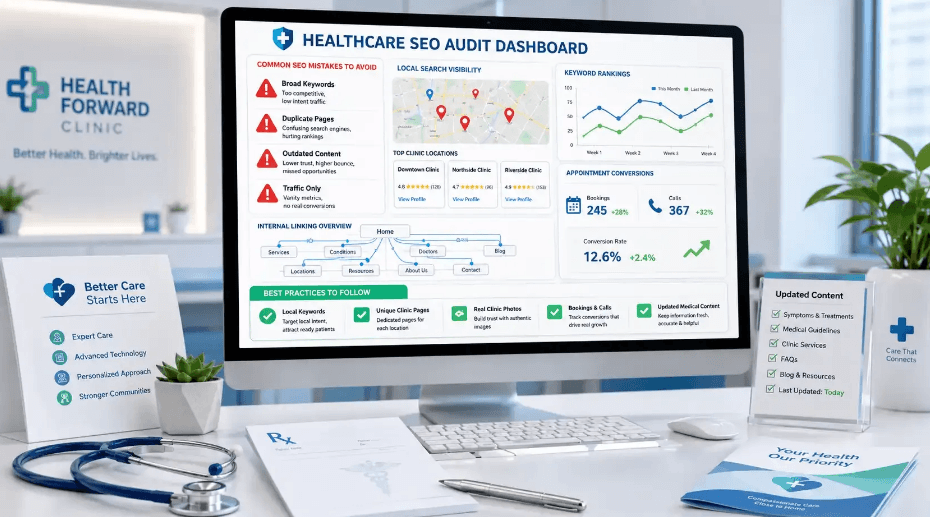
Trust is the deciding factor in almost every healthcare decision, and most of that trust is now built before a patient ever speaks to anyone at the practice. It forms through search results, reviews, website design, and how consistently a healthcare brand shows up across the web. SEO isn’t just a traffic tool in this context – it’s one of the biggest influences on whether a patient believes a provider is credible enough to book with.
Many practices still think of SEO purely in terms of rankings and clicks. In healthcare, its real value is deeper: it shapes the first impression a patient forms, often long before they ever visit a website in detail. Here’s how SEO builds -or quietly undermines -trust for healthcare brands.
Rankings Themselves Signal Credibility
Patients tend to assume that providers appearing at the top of local search results are more established and trustworthy, even if they don’t consciously think about it that way. A practice buried on page two, by comparison, can feel less credible by default, regardless of the actual quality of care it provides.
This means healthcare SEO does more than generate visits – it shapes a patient’s baseline assumption about a brand before they’ve read a single word on the website. Strong rankings function as a quiet form of social proof, communicating that a provider is established and relevant in its local market.
A Complete Google Business Profile Builds Instant Confidence
For many patients, a Google Business Profile is the very first real interaction they have with a healthcare brand, often before they click through to the website at all. Accurate hours, real photos, and a strong review count all signal legitimacy within seconds.
An incomplete or outdated profile has the opposite effect. Missing photos, inconsistent hours, or a thin review count can make an otherwise excellent practice look uncertain or inactive, undermining trust before a patient even gets to see what the brand actually offers.
Consistent Information Across the Web Reinforces Legitimacy
When a healthcare brand’s name, address, and phone number match exactly across its website, directories, and Google Business Profile, it reinforces legitimacy both to patients and to search engines. Inconsistencies, on the other hand, create quiet doubt – patients may wonder if they’re looking at the right location, or if the practice is still active.
This is one of the more overlooked aspects of healthcare SEO, but it plays a direct role in trust. A brand that appears consistent and accurate everywhere feels more dependable than one with scattered, conflicting details across the web.
Reviews Are the Modern Version of Word-of-Mouth Trust
SEO and reputation are deeply connected in healthcare. Search engines factor review volume and recency into local rankings, but reviews also serve as the clearest trust signal available to a patient scanning search results. A healthcare brand with a strong, active flow of recent reviews feels far more credible than one with only a handful of outdated ratings.
This is why review management is now considered part of healthcare SEO strategy rather than a separate reputation task. The two reinforce each other – better reviews improve rankings, and better rankings put those reviews in front of more patients.
Content Demonstrates Expertise, Not Just Keywords
Well-written healthcare content does more than target search terms; it demonstrates that a brand actually understands the conditions and concerns patients are searching for. Content that clearly and accurately answers real patient questions builds credibility in a way that generic, keyword-stuffed pages never can.
This matters even more in healthcare than in most other industries, where patients are especially sensitive to whether information feels accurate, current, and genuinely helpful. Thoughtful content, built as part of a broader healthcare SEO strategy, positions a brand as knowledgeable rather than just visible.
Website Design and Speed Quietly Signal Professionalism
A slow, outdated, or hard-to-navigate website undermines trust even if the practice behind it is excellent. Patients often equate a clean, fast, professional website with a well-run, modern practice, whether or not that association is entirely fair. SEO and user experience are closely linked here, since search engines also reward fast, well-structured, mobile-friendly sites -meaning the same improvements that help rankings also help patient trust.
This overlap is part of why healthcare SEO and website design shouldn’t be treated as separate projects. A site optimized for search but neglected in design (or vice versa) leaves trust-building value on the table either way.
Different Healthcare Provider Types Need to Build Trust Differently
Trust doesn’t look the same across every healthcare provider type. Patients researching urgent care want reassurance about speed, reliability, and immediate availability, while patients researching a specialist want detailed credentials, patient outcomes, and thorough explanations of the conditions treated.
An effective healthcare SEO strategy accounts for this difference, tailoring content and site structure to the specific type of trust a given provider’s patients are looking to establish before booking. This nuance is a key part of well-built healthcare marketing plans, rather than a generic approach applied across every kind of practice.
Why Trust-Focused SEO Compounds Over Time
Trust built through consistent, accurate, review-supported SEO tends to compound. Strong rankings attract more patients, which generates more reviews, which further strengthens both rankings and credibility. This cycle means healthcare brands that invest early in trust-focused SEO build an advantage that becomes increasingly difficult for competitors to catch up to.
This long-term compounding effect is one of the clearest arguments for treating healthcare SEO as a core part of practice growth, not a short-term marketing tactic aimed only at short-term traffic gains.
Getting the Trust-Building Details Right
Building trust through SEO requires attention across several moving parts at once – accurate listings, consistent information, active review management, credible content, and a fast, professional website. Many practices find it difficult to manage all of these consistently alongside daily patient care, which is often when it makes sense to hire a healthcare marketing agency with specific healthcare experience.
Working with a team offering dedicated healthcare SEO services helps ensure these trust-building elements work together as a coordinated strategy, rather than being addressed piecemeal. Agencies like Healthcareketing focus specifically on this kind of healthcare marketing support, helping healthcare brands build the kind of consistent, credible online presence that earns patient trust before the first phone call.
When comparing options, it’s worth identifying the best healthcare marketing company for a specific provider type, since healthcare marketing agency costs and scope of services can vary significantly depending on what’s included.
The Bottom Line
SEO’s role in healthcare goes far beyond rankings and traffic; it directly shapes whether patients trust a brand enough to book with it. From search visibility and reviews to content and website design, every element of a strong healthcare SEO strategy also functions as a trust-building tool, making it one of the most important long-term investments a healthcare brand can make.
See also: Why Tree Trimming Is Crucial for the Health of Your Trees
FAQ
How does SEO actually build trust, rather than just visibility?
Patients associate strong search rankings, complete profiles, and active reviews with credibility, even if they don’t consciously analyze why. These same elements that improve visibility also shape a patient’s first impression of how established and trustworthy a healthcare brand is.
Do online reviews really impact SEO, or just patient perception?
Both. Search engines factor review volume and recency into local rankings, while reviews simultaneously serve as a direct trust signal for patients scanning search results, meaning reviews influence both discovery and conversion.
Why do website speed and design matter for SEO in healthcare specifically? Search engines reward fast, well-structured, mobile-friendly websites with better rankings, and patients associate the same qualities with a professional, trustworthy practice. This overlap means design and SEO improvements reinforce each other rather than working independently.
Does trust-building SEO look different for different healthcare provider types? Yes. Urgent care patients look for reassurance about speed and reliability, while patients researching specialists want detailed credentials and outcomes. Content and site structure should reflect these different trust needs rather than using one generic approach.
How long does it take to build trust through healthcare SEO?
It builds gradually and compounds over time; stronger rankings lead to more visibility, which generates more reviews, which further strengthens both trust and rankings. Most practices see meaningful trust and visibility improvements within several months of consistent effort.
Conclusion
For healthcare brands, SEO isn’t separate from reputation; it’s one of the primary ways that reputation gets built and communicated before a patient ever makes contact. Practices that treat SEO as a trust-building strategy, not just a traffic tactic, position themselves to be seen as credible, established, and worth choosing the moment a patient starts searching.